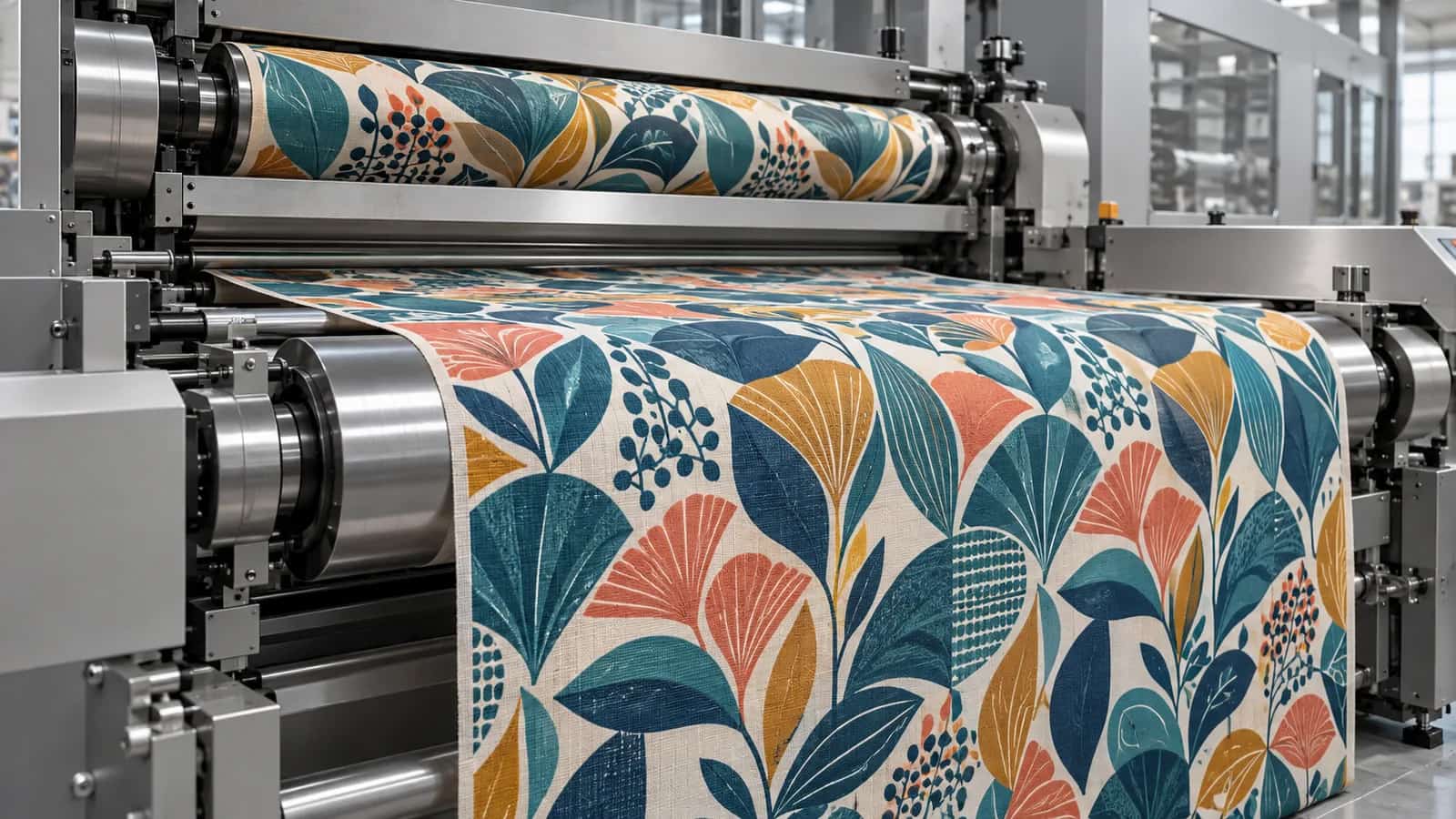
Two technologies, two approaches to preparation
In digital textile printing, the image is applied directly from a file by printheads. Changing a design does not require a new set of screens, although samples, machine settings and file adjustments may still be needed. One example of a machine in this category is EFI Reggiani COLORS. Choosing a line for digital textile printing also involves fabric preparation and fixation.
In rotary screen printing, the design is transferred to the fabric through cylindrical screens, with perforations corresponding to individual colours. Preparing and setting them up creates a cost for starting production of a particular design. EFI Reggiani UNICA is a rotary printer designed for woven and knitted fabrics.
A print run is more than a number of metres
Setup costs and the cost per accepted metre
Setup costs cover the work and materials needed to start production of a given design. In rotary screen printing, screen preparation is a significant component. For digital textile printing, costs may include file preparation, a trial and fine-tuning the settings. The specific items depend on the mill, machine and order requirements.
The cost per accepted metre must be calculated separately. It includes fabric and dyes or inks, machine time, operator labour, preparation and finishing, as well as any losses while bringing production into specification. Here, an “accepted metre” means a metre that meets the agreed quality requirements and can be delivered to the customer. The cost of printed fabric alone does not show the full economics.
For a short print run, setup costs can account for a large share of the total order cost. When a design is repeated in subsequent orders, setup can be spread across more metres if the condition of the screens and the unchanged design allow them to be reused. Further start-up, colour matching and quality checks must still be included in the costs. There is no universal metre threshold above which one technology is always cheaper.
Design variety and changeovers
A batch with a large total metreage may consist of many small orders that differ by design, colour or substrate. This mix means further preparation and changeovers, when the machine configuration is changed between jobs. So assess more than the total metres: consider the number of designs, the length of each run and how often changes occur.
Digital textile printing can make frequent design changes easier to handle because it does not require a separate screen for every design. It does not eliminate all downtime, however: changing the fabric, colour profile, application settings or fixation process may still take time. Rotary screen printing can suit a repeat production schedule when designs return under sufficiently similar conditions.
Pattern repeat, colour and consistency
The pattern repeat is the length after which a motif repeats on the fabric. When choosing a technology, check that the required pattern repeat can be achieved and reproduced consistently on the machine. Working width, fabric properties and colour registration also matter: this is how the positions of the printed design elements align with one another.
The number of colours affects process preparation, but does not by itself determine the choice. In rotary screen printing, each colour may have its own screen; in digital textile printing, the result depends on the ink configuration, printheads and colour profile. For demanding designs, compare samples printed on the intended fabric. The available colour range matters, as do print uniformity across and along the fabric and shade consistency between batches.
A Spanish textile printer chose the digital EFI Reggiani COLORS for its extended gamut, print quality and uniformity. This is an example of criteria that can matter when selecting a machine. The choice therefore met design requirements. This example alone does not establish a break-even point; that requires order and cost data from the specific mill.
Productivity and the post-printing process
A machine’s stated speed is not enough to compare the productivity of two processes. A comparison is meaningful when the material, required quality, working width and colour range are the same. It should also account for start-up, changeovers, cleaning and the proportion of production that passes quality control. Do not directly compare metres per minute with square metres per hour: the units differ, and actual output also depends on width.
After printing, the dye or ink may need fixation, followed by washing-off. The precise sequence depends on the dye or ink system, the material and the end-use requirements. It is not determined automatically by whether the printing is digital or rotary. Before buying, check the whole process: from fabric preparation and printing through to fixation and the required finishing. Information about digital textile printing inks can help account for one part of this process.
How to make a decision
Collect data from representative orders and calculate both options using the same cost definition. Include preparation, changeover time, material consumption, waste, finishing and customer requirements. Run a trial on the intended substrate and assess it against agreed quality criteria.
Prepare the following information when selecting a machine:
- monthly and annual metres, and the typical size of an individual order;
- the number of designs in a batch and how often they recur;
- the required pattern repeat, fabric width and types of substrate;
- the number of colours, required gamut and acceptable shade variation between batches;
- requirements for uniformity, colour registration and quality after fixation;
- preparation, changeover, printing and finishing times;
- cost data for materials, waste and metres accepted after inspection.
Only this set of information makes it possible to establish a break-even point for your own production mix. The labels “short” and “large print run” are not enough: what matters is how many orders actually repeat the same designs and under what conditions they are printed.