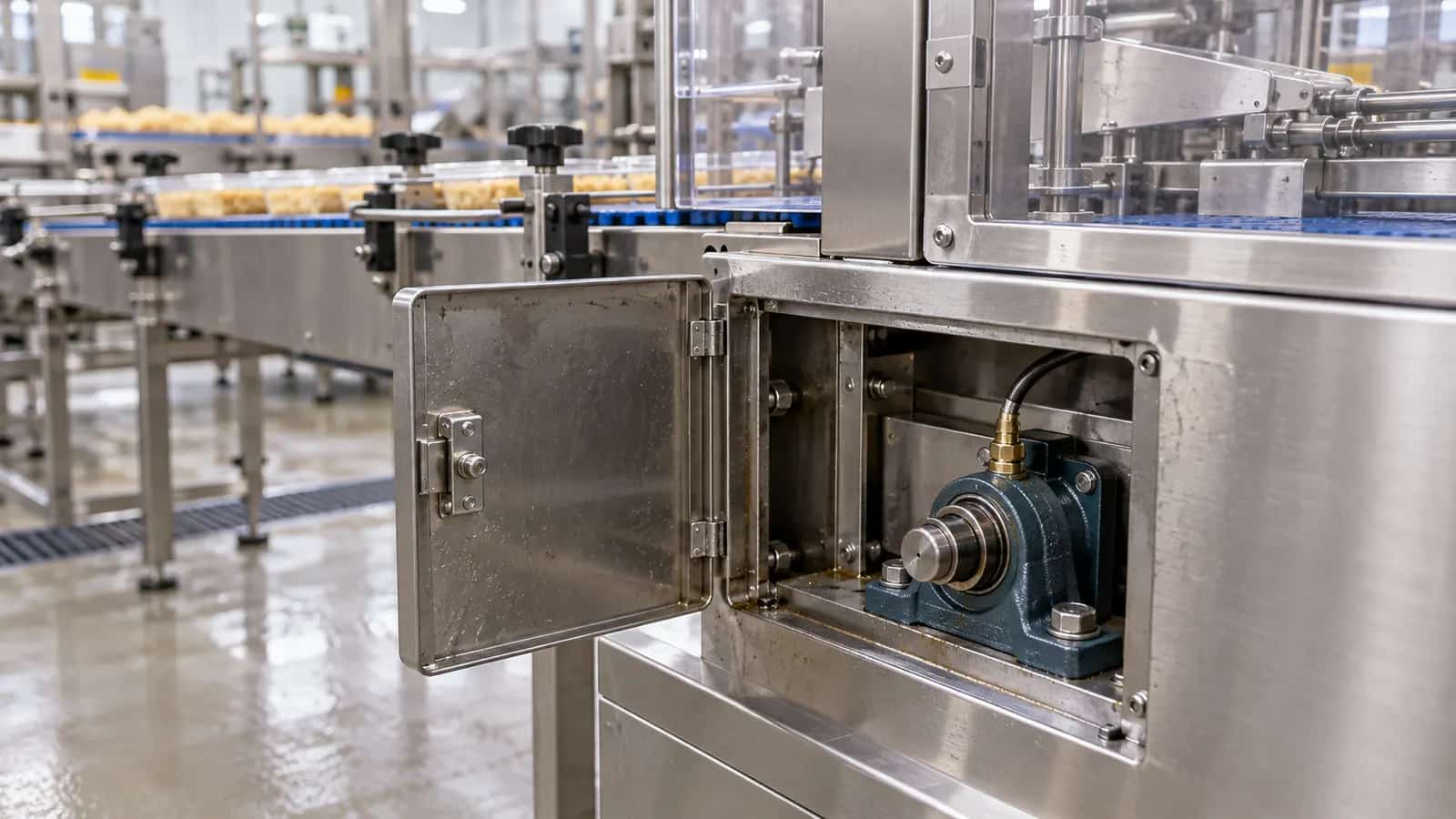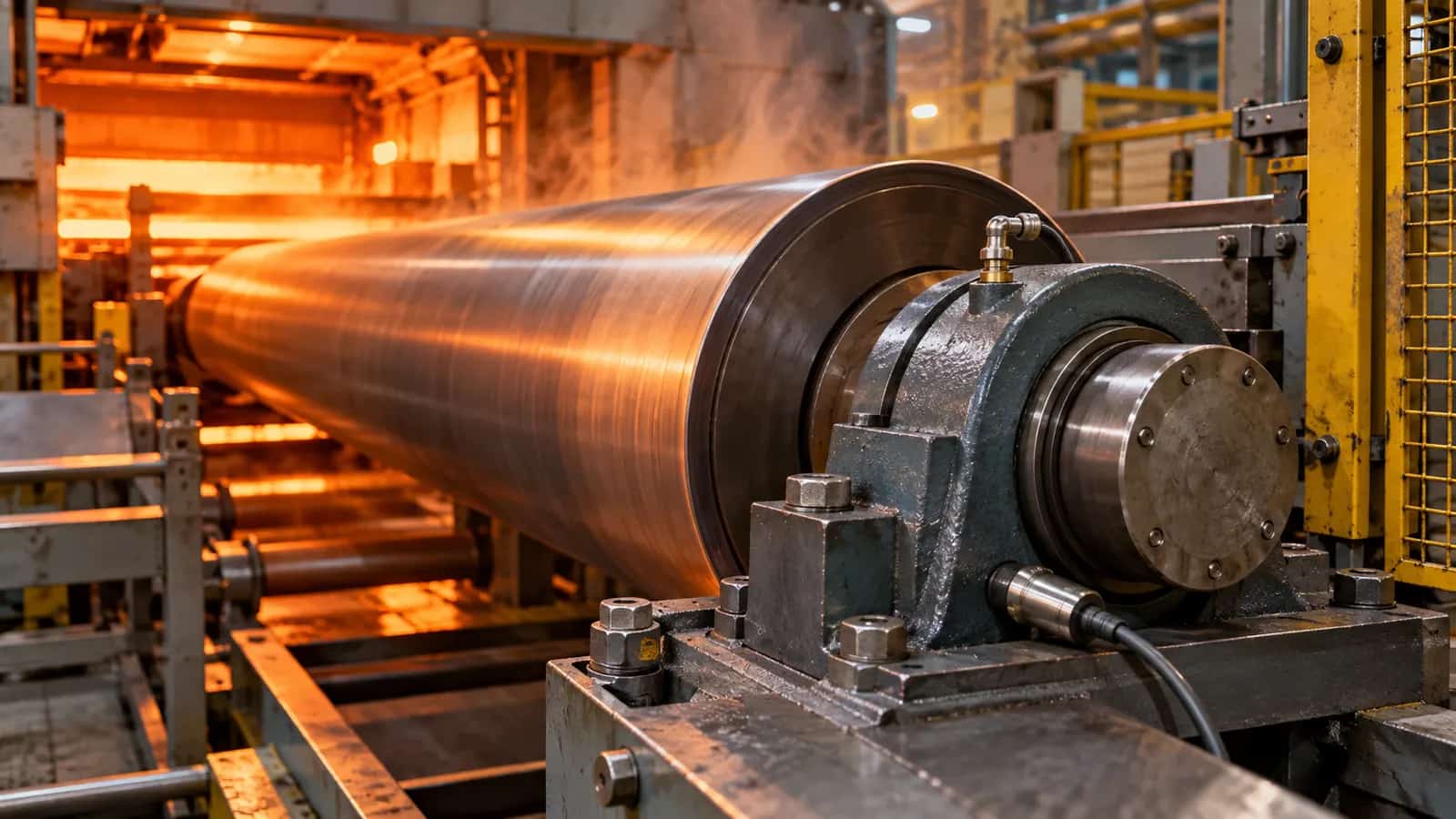
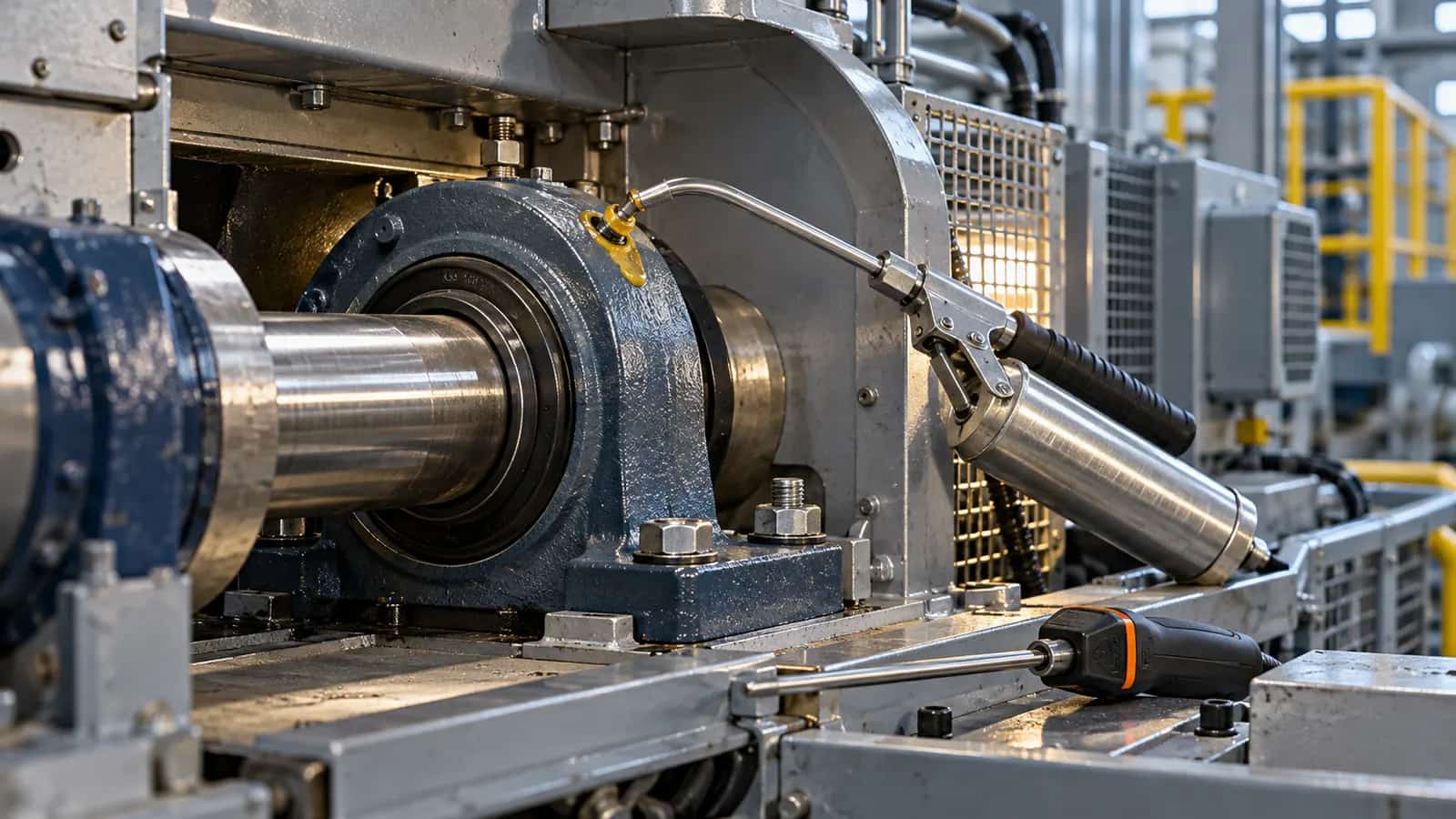
What happens when there is too much grease?
After initial filling or relubrication, excess grease has to move out of the bearing into the free space in the housing. SKF calls this the running-in period. If there is not enough free space, too much grease was applied or the grease has no way out, the rolling elements churn it with every revolution. Running resistance increases and the temperature rises, particularly quickly at high speed.
With the correct procedure, temperature may rise temporarily during running-in and then drop considerably once the grease has distributed in the housing. If the rise persists, returns after every relubrication or comes with leakage at a seal, check the grease quantity and the whole bearing arrangement. Leakage is not always caused by excess grease. Seal condition, temperature, a pressure difference across the housing and bearing condition also matter.
Symptoms that justify checking the quantity
No single symptom confirms over-greasing. Each of the signs below is still a reason to investigate. Adding more grease to a bearing that seems hot can make the problem worse.
- temperature rises quickly after relubrication or start-up;
- operating temperature stays higher than before at similar speed and load;
- grease appears at a seal, cover or designed exit hole;
- noise or vibration changes after relubrication;
- maintenance records show frequent greasing but no quantity per relubrication.
Noise, vibration and temperature can also result from raceway damage, misalignment, excessive clearance, overload, seal friction or a cooling problem. Treat them as data to compare, not as a diagnosis on their own.
How to check whether excess grease is the problem
1. Secure the machine and reconstruct the history
Follow the machine’s safe shutdown procedure before inspection. Record the bearing designation, housing type, speed, load, temperature, time since the last relubrication and the grease used. If the maintenance records do not state the quantity, record that as a gap. Convert grease-gun strokes into a quantity only after checking the gun’s output (step 3).
2. Compare quantity and interval with the documentation
Check the machine manual, the bearing manufacturer’s data or the lubrication-point record. The quantity depends on bearing design, free space in the housing, speed and operating conditions; the interval also depends on contamination, moisture and temperature. Do not copy a dose from another point just because the bearings are a similar size. At high speed, a quantity error shows up faster as a temperature rise.
3. Check the dispensing method
Establish how much grease the gun delivers per stroke and compare it with the lubrication-point record. SKF Cooper states that one shot from a conventional side-lever grease gun is approximately 2 ml. Check your own gun rather than assuming this value. Set an automatic lubricator to deliver, on average, the quantity specified for the interval. Also check the coupler, hose, vent and whether the exit hole or space for used grease is clear, if the housing has one. Do not remove a seal or open a sealed bearing to check the quantity.
4. Compare the temperature trend under the same conditions
Measure at the same point and at comparable speed, load and running time. Record the reading before and after relubrication. A sustained change in temperature matters, not how hot the housing feels. The SKF troubleshooting guide for fan bearings notes that a housing at 60–70 °C feels hot to the touch, yet this is perfectly acceptable for a correctly lubricated bearing. If the temperature exceeds the manufacturer’s limit or keeps rising without stabilising, follow the machine’s emergency procedure. A housing measurement does not replace an assessment of other causes of hot running.
5. Inspect purged grease and the surrounding area
If the design provides for controlled purging of used grease, check it for water, solid particles or signs of overheating. Record what you see, but do not judge bearing condition from grease colour alone. Operating conditions, maintenance history and, where justified, a sample analysis are also needed.
What to do when over-greasing is confirmed
First stop further relubrication and establish whether the bearing can continue to run safely. If the housing manufacturer provides an exit hole or a procedure for removing excess grease, follow it. Do not remove plugs or dismantle components outside the manufacturer’s instructions or without a risk assessment.
Then correct the quantity and interval in the lubrication-point record. Record the grease, quantity, date, person carrying out the work, temperature and what you observed after start-up. If you change grease, check its compatibility with the grease already in use and plan the changeover according to the plant procedure. The NLGI grade describes consistency only, so it is not enough to assess compatibility or quantity.
Grease selection still matters
Once the quantity problem is solved, check that the grease suits the bearing and operating conditions. The TC Kolor bearing grease range lists products by application and catalogue data. G 5402 is described as a grease for bearings running at high speed, and GS ROLLER DR as a grease for bearings in dryers, steamers, stenters and rolling mills. The choice depends on comparing the data of the specific lubrication point with the product data sheet.
What to include in a technical enquiry
Before sending an enquiry about bearing greases, collect the bearing and housing designation, machine model, speed, load, temperature, ambient conditions, grease currently in use, quantity per relubrication, interval and temperature measurement method. This data helps distinguish a quantity problem from a product selection, sealing or mechanical-condition problem.